
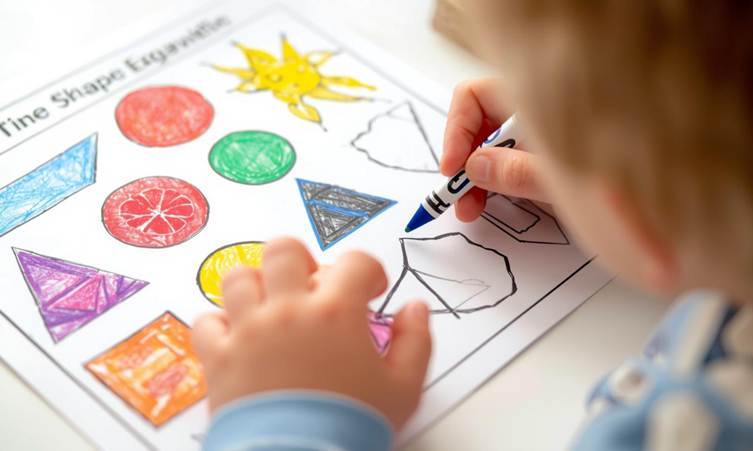
The first time your child points to a plate and says “circle”, the world suddenly becomes a little more organised for them. Shape Tracing and Coloring Workbook for Kids Ages 3-6
turn that tiny moment into a solid foundation for early maths and writing. These simple printables help parents and teachers of ages 3 to 6 teach basic shapes in a calm, structured way at home or in class.
Before children understand numbers or sums, they must learn to see patterns and shapes in their environment. When kids can recognise circles, squares, triangles, rectangles, and ovals, they are training their brain to notice details and differences. That same skill later helps with reading similar-looking letters, copying from the board, and understanding geometry in primary school.
Core Skills Built with Shapes Worksheets
Good Shape Tracing and Coloring Workbook for Kids Ages 3-6 are not just worksheet pages. Used correctly, they build several important skills at once. Current Indian foundational-stage guidelines highlight playful work with basic shapes and spatial language as part of everyday classroom routines.
The national foundational-stage framework highlights play-based learning with languages, numbers, counting, colours and shapes for ages 3–8 (see section 1.3.3, page 35 of the official foundational-stage document.
- Visual recognition: Spotting shapes in different sizes, positions, and contexts.
- Vocabulary and communication: Saying and hearing words like “circle”, “square”, and “rectangle” regularly.
- Fine motor control: Tracing and coloring builds hand strength and pencil grip for future handwriting.
- Early maths thinking: Counting sides and corners prepares children for basic geometry and problem-solving.
Early childhood guidelines and curriculum frameworks in many countries emphasise playful maths exposure in the foundational years. They highlight shape recognition, sorting, and pattern work as key readiness skills before formal schooling. This aligns with the idea that children learn best through hands-on, visual activities rather than only rote memorisation.
Types of Shape Tracing and Coloring Workbook for Kids Ages 3-6 to Use (Trace, Color, Match)
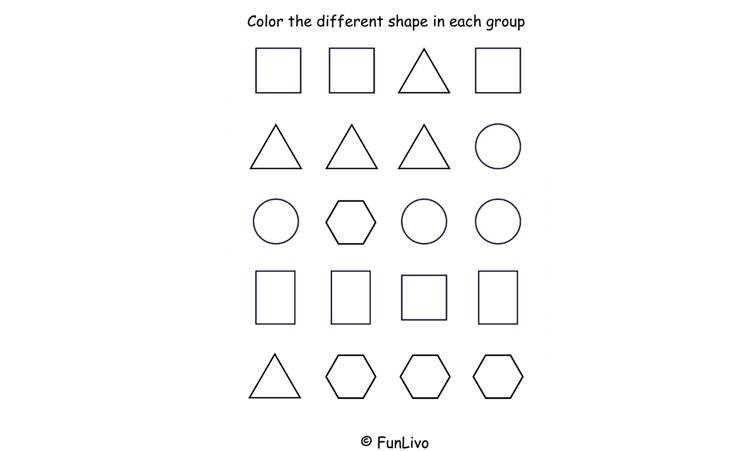
To keep children engaged and progressing, mix different kinds of shapes worksheets for kindergarten across the week instead of repeating the same page daily.
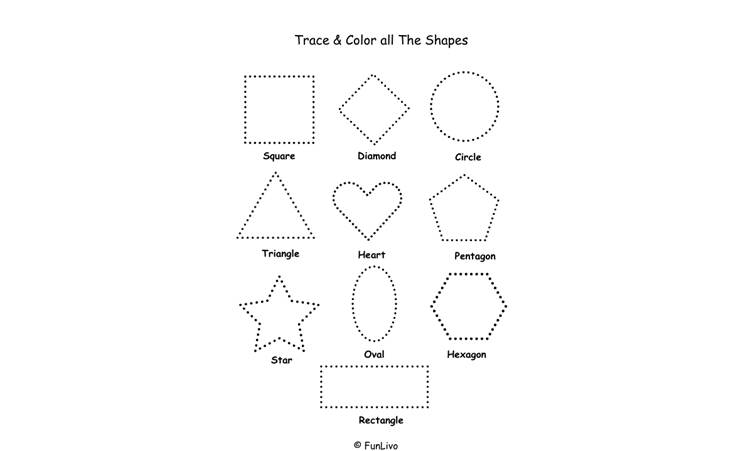
- Shape chart pages: One page shows each basic shape with its name and a simple picture (circle – sun, square – window, triangle – pizza slice). This can be used as a poster or reference sheet.
- Tracing pages: Children trace over dotted outlines of each shape. Start with large outlines for 3–4 year olds and move to smaller, repeated shapes for 5–6 year olds.
- Color-by-shape pages: Kids color all circles red, all squares blue, all triangles yellow. This checks recognition without writing pressure.
- Matching worksheets: Children draw lines from a shape to a real-life object, such as rectangle to door or circle to ball.
- Sorting/cut-and-paste pages: Kids cut out shapes and glue them into the correct column, which also strengthens scissor skills and hand–eye coordination.
A balanced pack or workbook will rotate through these types so children see the same shapes in many different formats. That variety prevents boredom and makes learning stick.
Step-by-Step Shape Learning Plan (Ages 3–6)
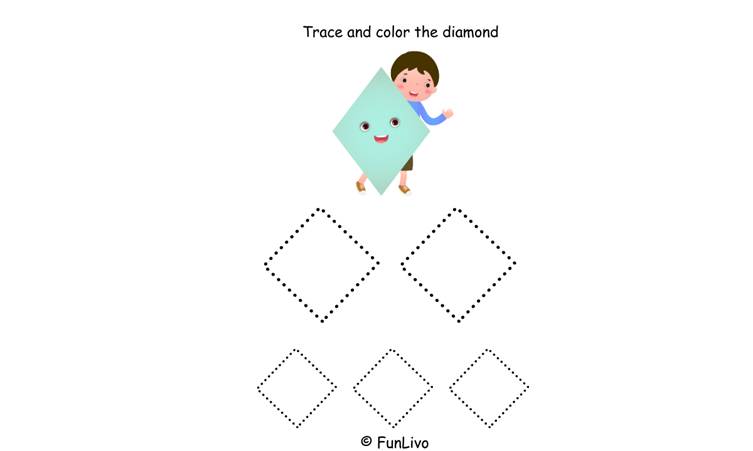
Parents often ask, “How do I use shapes worksheets without overwhelming my child?” A simple, predictable plan works best. Here is one example routine you can adapt:
- Day 1 – Introduce & Trace
Look at the shape chart together. Name each shape and ask your child to point to “circle”, “square”, and “triangle”. Then do one tracing page for just one or two shapes. - Day 2 – Color & Hunt
Use a color-by-shape worksheet. After finishing, walk around the room and ask your child to find three circles or three rectangles in real objects. - Day 3 – Match & Make
Complete a matching worksheet where your child joins each shape to an object. End with a quick drawing: for example, a house made from a square (body) and triangle (roof).
For ages 3–4, keep shapes big and instructions very simple: “Trace the circle. Color all circles red.” For ages 5–6, add a little more challenge—counting sides, noticing corners, or mixing several shapes on one page. The goal is not to finish a huge number of sheets but to create three or four short, positive sessions each week.
Aligned with Early Learning Recommendations
Global early-maths research notes that sorting, matching, and naming shapes in the preschool years strongly supports later geometry and problem‑solving.
When you choose shapes worksheets for kindergarten, it helps to know they support what major education bodies recommend. Many early childhood frameworks highlight:
- Play-based, visual learning with plenty of pictures and real-life connections.
- Opportunities for children to talk about what they see, not just silently copy.
- Gradual movement from big, gross-motor movements to smaller, controlled fine-motor tasks.
Shape activities—tracing, coloring, matching, sorting—fit directly into this approach. They allow children to explore forms in a low-pressure way while building language and motor skills. For parents, this means you are not “going off syllabus”; you are quietly supporting the same skills that formal school will expect later.
Choosing the Right Shapes Worksheets for Your Child
Not all printables are equal. When selecting Shape Tracing and Coloring Workbook for Kids Ages 3-6, look for:
- Clear outlines: Thick, dark lines that are easy for small eyes and hands to follow.
- Big spaces for young learners: Large shapes for beginners; smaller shapes only when they are ready.
- Limited clutter: Too many shapes or decorations on one page can overwhelm a 3–4 year old.
- Simple instructions: Short, clear prompts that parents can explain in one or two sentences.
- Progression: A mix of easy and slightly harder pages so your child can grow without feeling stuck. The FunLivo workbook has been designed around exactly these points so families can use it for many months, not just a few days.
FAQ About Shape Tracing and Coloring Workbook for Kids Ages 3-6
1. How many shapes worksheets should my child do each week?
Around three to four short sessions are enough. One or two pages per session works well, especially if you add a quick real-life “shape hunt” afterwards.
2. What if my child refuses worksheets?
Start with the most playful pages—color-by-shape or matching—before you push pencil tracing. Let your child choose between two worksheets so they feel some control.
3. Are 2D shapes enough for kindergarten?
Yes, for the early years, focus on flat shapes like circle, square, triangle, rectangle, and oval. When your child is confident, you can gradually introduce 3D forms like ball (sphere) or box (cube) using toys.
4. Can I reuse shapes worksheets?
Print on slightly thicker paper and laminate the pages. Your child can then use dry-erase markers, wipe them clean, and repeat the activities many times.
5. How do I know my child is improving?
Keep a small folder of completed pages. Over a few weeks, you should see neater tracing, quicker recognition, and fewer mistakes in matching and coloring.
Final Thoughts
Shape Tracing and Coloring Workbook for Kids Ages 3-6 give parents and teachers a low-stress way to build early maths confidence at home. With a simple weekly routine, a mix of tracing, coloring, and matching pages, and a few minutes of positive attention, children start to see shapes everywhere and feel proud of their new skills.
Download our 97 Pages Mega Shapes Worksheets for Kindergarten bundle to get ready-to-print charts, tracing pages, color-by-shape activities, and matching games for ages 3–6.
Remind them that all pages can be laminated and used with dry-erase markers so kids can practise again and again without wasting paper.
Disclaimer: This article and the Shape Tracing and Coloring Workbook for Kids Ages 3-6 are for general educational purposes only. They are not a substitute for professional advice.