
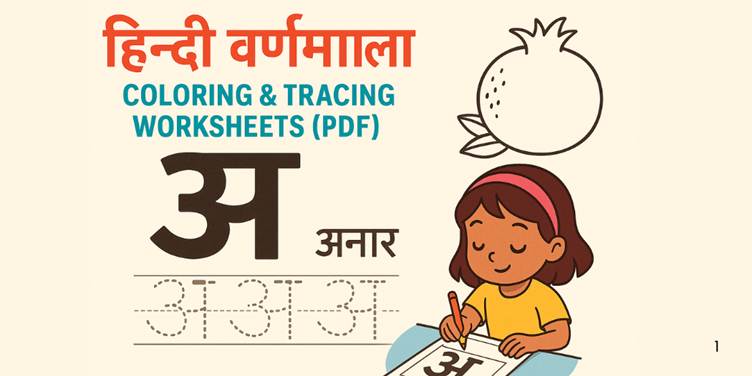
Learning Hindi letters becomes far easier for young children when the activities feel playful instead of stressful. Many parents and teachers notice the same problem: kids can recognize some letters, but they struggle to write them neatly, confuse similar shapes, or lose interest quickly. A structured, kid-friendly printable helps remove this gap.
These Hindi Varnamala Tracing and Coloring Worksheets for Kids offer a simple, engaging way for Nursery–UKG students to learn swar (vowels) and vyanjan (consonants) through tracing, coloring, and repetition—an effective method used in early-years classrooms across India.
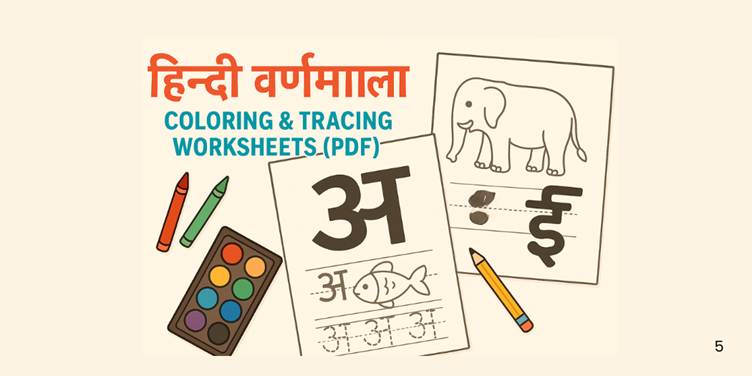
The workbook covers letters from अ to ह, includes dotted tracing lines, and adds one clean outline image per page so children learn through both writing and visual association. This combination builds confidence, pencil control, and early Hindi literacy skills at home or in school.
Why Tracing + Coloring Helps Kids Learn Hindi Faster
Young learners understand letters better when activities include visual cues, hand movement, and repeated exposure. Hindi letters are especially unique because of their curves, matras, and strokes. Tracing worksheets allow children to observe the correct structure and then repeat it comfortably.
Benefits at a glance
- Strengthens handwriting formation
- Builds memory and recognition of swar and vyanjan
- Improves fine-motor control needed for neat writing
- Coloring adds creativity, keeping learning stress-free
- Suitable for Nursery, LKG, UKG, and early Grade 1
Research in early literacy consistently shows that short, repeated handwriting practice improves language retention. Foundational Literacy Framework, early learning materials should include simple, and repetitive practice activities to support independent writing skills.
India’s foundational-stage framework for ages 3–8 emphasises play‑based language and literacy, including activities with letters, sounds, stories and writing readiness, not just rote copying.
What’s Inside the Hindi Varnamala Tracing and Coloring Worksheets
The workbook is designed for young beginners, ensuring clean layout, large letters, and simple illustrations. Teachers can use it during writing periods, while parents can use it for after-school practice.
Each letter page includes:
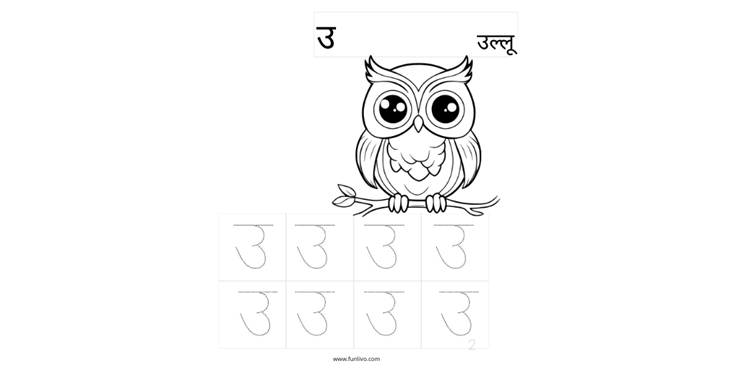
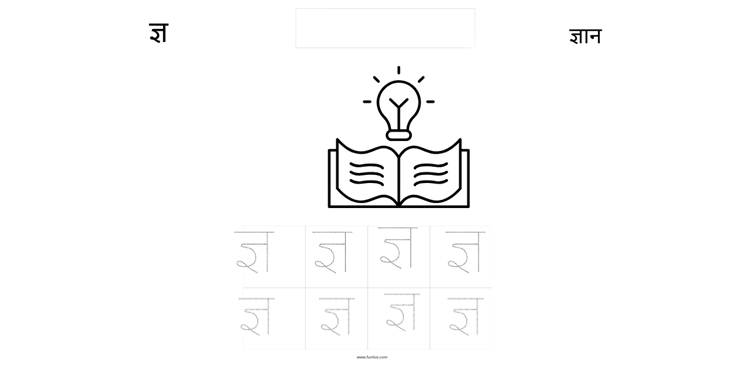
- A large Hindi letter (Swar or Vyanjan)
- Dotted tracing lines to guide correct formation
- A simple object coloring picture (e.g., अ – अनार)
- Ample space for rewriting without stress
- Kid-safe fonts and clean strokes
Letters Covered
- Swar (अ–अः)
- Vyanjan (क–ह)
- Common combined letters (क्ष, त्र, ज्ञ where applicable)
This structure supports both school-level handwriting learning and home revision programs.
Why Early Hindi Writing Practice Matters
Many children can speak Hindi fluently, yet hesitate when asked to write. Early Hindi writing practice improves reading readiness, pronunciation, and recognition clarity. Early‑literacy research also highlights that tracing, naming and talking about letters in short, frequent sessions builds stronger reading and writing skills than occasional long drills, especially in preschool and kindergarten years.
The U.S.-based GreatSchools organization points out that early writing activities support cognitive development, sequencing, and symbol recognition—skills essential for early literacy.
When tracing becomes a routine, children naturally develop:
- Better stroke direction understanding
- Improved letter spacing
- Stronger visual memory
- Confidence in reading and writing Hindi
How Parents & Teachers Can Use These Worksheets Daily
A simple routine that actually works
Use the worksheets for 10–12 minutes per day, 3–5 days a week.
Short sessions keep learning enjoyable and lead to long-term retention.
Teaching Tips
- Start with swar, then move to vyanjan
- Let the child trace each letter 2–3 times
- Encourage slow writing rather than fast writing
- Use the coloring picture as a warm-up activity
- Repeat letters that look confusing (उ / ऊ, ब / भ, स / श / ष)
For classroom use
- Use as morning writing practice
- Add pages to Hindi learning centers
- Use laminated versions for multi-student reuse
For additional Hindi letter practice, teachers can also use the
Hindi Varnamala Tracing Workbook (PDF)
Who These Worksheets Are Perfect For
This workbook is designed for:
- Nursery – handwriting exposure
- LKG – tracing and identifying letters
- UKG – improving letter formation
- Grade 1 beginners – reinforcement
- Homeschooling families
- Hindi beginners learning as a second language
FAQs: Hindi Varnamala Tracing and Coloring Worksheets for Kids
1. What age group can use this workbook?
Ideal for ages 3–6 years (Nursery to UKG). Older beginners can also use it for handwriting improvement.
2. Does it include both swar and vyanjan?
Yes, all Hindi vowels and consonants are included with tracing lines and coloring pictures.
3. Are matras included?
Basic matra-based forms appear where needed for early introduction, following age-appropriate difficulty.
4. Can this PDF be used in classrooms?
Yes. Teachers can print, laminate, or add pages to daily writing folders.
5. Is it beginner-friendly for children who don’t know Hindi?
Absolutely—large letters, dotted lines, and simple images make it suitable even for first-time learners.
Final Thoughts
Strong Hindi writing skills begin with clean, repeated practice and playful engagement. These Hindi Varnamala Tracing and Coloring Worksheets for Kids help children learn confidently by combining structured tracing with fun coloring—an approach that works equally well for parents and teachers.
Each page supports independent learning, visual recognition, and proper handwriting habits, making it a reliable foundation resource for early education.
Give your child or students a strong start with Hindi writing.
Download the Hindi Varnamala Tracing and Coloring Worksheets for Kids and begin your easy 10-minute daily practice routine.
Print the worksheets on A4 sheets, laminate them, and use dry-erase markers for unlimited reuse—perfect for classrooms and multi-time practice.
Disclaimer
These Hindi Varnamala Tracing and Coloring Worksheets for Kids support general early-learning practice. They are not a replacement for professional educational assessment or therapy.