

Teaching the alphabet to toddlers does not require long study sessions or complicated methods. In fact, the most effective learning happens through short, hands-on activities that feel like play. Alphabet tracing worksheets are one of the easiest and most trusted ways to help children aged 2–4 build early writing skills, letter recognition, and confidence.
This guide explains why alphabet tracing works, how to use it correctly at home, and how parents can avoid common mistakes while teaching letters to young children.
Why Alphabet Learning Starts Between Ages 2–4

Between the ages of 2 and 4, a child’s brain develops rapidly. This is the stage when children naturally begin to notice shapes, patterns, and sounds. Introducing the alphabet during this time helps them become familiar with letter forms without pressure.
At this age, children are not expected to read or write perfectly. The goal is exposure—seeing letters, hearing sounds, and slowly learning how to control a pencil or crayon.
Repeated exposure through alphabet tracing worksheets helps the brain connect:
- Letter shapes
- Letter sounds
- Hand movement and coordination
When learning feels playful and stress-free, children develop curiosity instead of fear toward writing.
What Are Alphabet Tracing Worksheets?
Alphabet tracing worksheets are printable pages where children trace letters using dotted or guided lines. These worksheets often include:
- Uppercase and lowercase letters
- Simple line tracing exercises
- Object pictures related to each letter
- Coloring activities for reinforcement
Together, these activities strengthen both fine motor skills and early literacy skills.
Why Line Tracing Is Important Before Letter Tracing
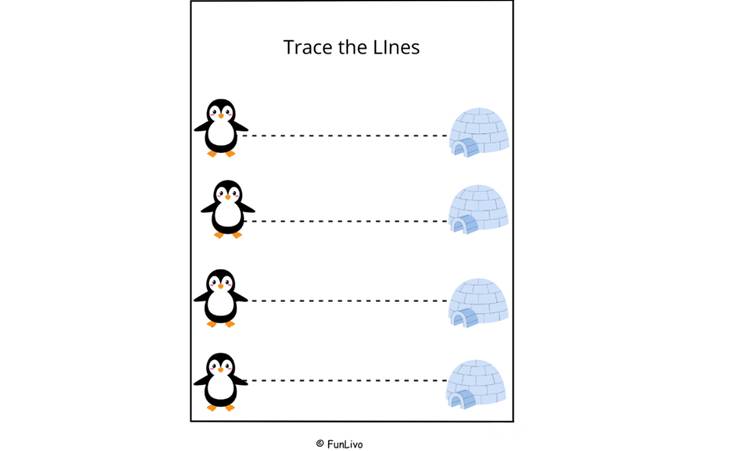
Many parents skip straight to alphabet tracing, but line tracing worksheets are just as important.
Line tracing helps children:
- Learn pencil control
- Strengthen hand muscles
- Practice direction (left to right, top to bottom)
Without this foundation, letter tracing can feel difficult and frustrating.
Pre-writing activities gently prepare small hands for writing without pressure, making alphabet learning smoother and more enjoyable.
Alphabet Tracing with Coloring: Why It Works Better
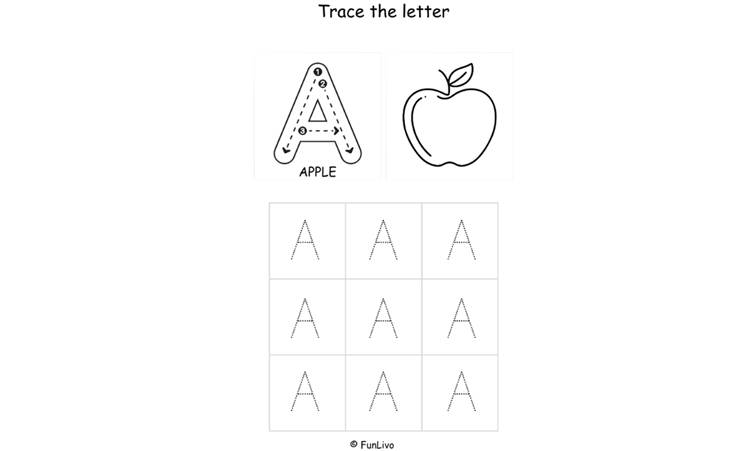
Combining tracing with coloring improves focus and engagement. Coloring keeps toddlers interested while reinforcing letter recognition.
Benefits of combining tracing and coloring:
- Improves attention span
- Builds hand strength
- Makes learning fun, not forced
- Encourages creativity alongside structure
Children remember letters better when they associate them with familiar objects (A for Apple, B for Ball) and enjoyable activities.
Printable Worksheets vs Screens: What’s Better for Toddlers?
Printable worksheets offer benefits that screens cannot.
Unlike digital apps:
- Worksheets slow down learning naturally
- Children focus on one task at a time
- Parents can observe progress directly
- No screen fatigue or distractions
Research-based child development organizations consistently recommend limiting screen exposure for young children and encouraging more hands-on, real-world activities. The American Academy of Child & Adolescent Psychiatry (AACAP) highlights that excessive screen time in early childhood can negatively affect attention, behavior, and learning, emphasizing the need for balanced, interactive play instead. Educational experts further explain that pre-writing activities such as tracing, coloring, and drawing help strengthen fine motor skills and prepare children for handwriting before formal writing begins.
Research shared by Understood.org also explains that pre-writing activities strengthen the muscles required for proper pencil grip and letter formation later in school.
Simple Daily Alphabet Routine (5–10 Minutes)
You do not need long study sessions. Short, consistent practice works best.
Sample routine:
- 2 minutes: Line tracing
- 3 minutes: Alphabet tracing (1–2 letters only)
- 2 minutes: Object coloring
- 2 minutes: Talking about the letter sound
Stop when the child loses interest. Progress comes from repetition over time, not from completing many pages in one day.
Common Mistakes Parents Make (Avoid These)
Many parents unintentionally slow progress by expecting too much too soon.
Avoid these mistakes:
- Forcing writing before hand strength develops
- Teaching too many letters at once
- Expecting neat writing early
- Relying only on learning apps
- Comparing progress with other children
Every child learns at their own pace. Alphabet tracing worksheets are meant to support learning—not rush it.
How to Choose the Right Alphabet Tracing Worksheets
When selecting worksheets for toddlers, look for:
- Large, clear letters
- Simple tracing lines
- Minimal clutter on each page
- Age-appropriate illustrations
- Printable, reusable PDFs
A good workbook grows with the child, starting with simple strokes and gradually moving to full letter tracing.
FAQs About Alphabet Tracing Worksheets
What age should a child start alphabet tracing?
Children can start basic tracing activities around age 2, focusing on lines and shapes. Letter tracing usually becomes easier between ages 3–4.
How many worksheets should a toddler do per day?
One or two pages per day is enough. The focus should be enjoyment and consistency, not completion.
Should toddlers learn uppercase or lowercase first?
Uppercase letters are easier for toddlers to recognize and trace. Lowercase letters can be introduced later.
Are printable worksheets better than reusable books?
Printable worksheets allow repetition and flexibility. Children can practice again without pressure, and parents can choose pages based on readiness.
Final Thoughts
Alphabet tracing worksheets are a simple yet powerful tool for early learning. When used correctly, they help toddlers build confidence, coordination, and a positive relationship with letters.
Short sessions, playful activities, and the right worksheets make alphabet learning effective and enjoyable—for both children and parents.