
Maze Activities for Preschool Kids: Benefits, Skills, and Printable Learning Ideas.
Why Maze Worksheets for Preschoolers Fix Pencil Control and Pre-Writing Struggles.
Key reasons maze activities work well:
Key Benefits of Maze Activities for Preschool
Types of Maze Activities for Preschool Learning.
How Often Should Preschoolers Do Maze Activities?.
Common Parent Problems Maze Activities Help Solve.
Frequently Asked Questions (FAQ)
Maze Activities for Preschool Kids: Benefits, Skills, and Printable Learning Ideas

Maze activities for preschool are one of the most effective and engaging ways to support early learning at home and in preschool. Simple maze paths encourage children to use their hands, eyes, and brain together—building essential pre-writing and thinking skills without pressure or screens.
For children between ages 3 and 5, maze activities offer the perfect balance between play and learning. They prepare young learners for writing, reading, and classroom routines in a calm, confidence-building way.
Why Maze Worksheets for Preschoolers Fix Pencil Control and Pre-Writing Struggles
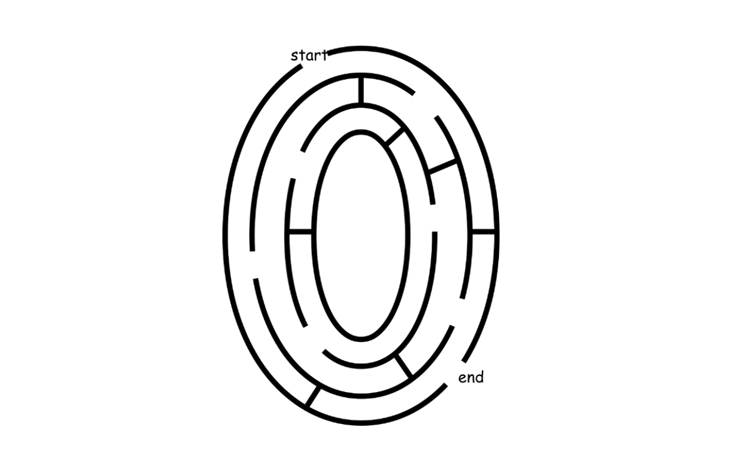
Maze worksheets for preschoolers aren’t just puzzles; they’re targeted for weak pencil grip and shaky lines. Preschoolers aged 2–4 often press too hard, scribble wildly, or give up on curves—classic signs of underdeveloped fine motor skills. UNESCO stresses inclusive early childhood education focusing on gross and fine motor skills via play for holistic development
- Pencil control mastery: Thick paths guide tiny hands through straight lines, loops, zigzags, and curves—the exact pre-writing shapes needed for letters.
- Pre-writing confidence: Start with simple toddler mazes, progress to alphabet mazes; kids trace paths without realizing they’re practicing letter formation.
- Child psychology win: Mazes tap into kids’ love for “winning”—reaching the end releases dopamine, making them beg for more instead of fighting screen time.
When a child traces a path from start to finish, they must focus, plan, and control their hand movements at the same time.
Key reasons maze activities work well:
- They are goal-oriented (reach the end)
- They encourage slow, controlled movements
- They allow mistakes without pressure
- They feel playful, not academic
Key Benefits of Maze Activities for Preschool
Parents search for “maze worksheets for preschoolers” because they deliver real results fast. These activities align with child development stages: 3-year-olds need basic path tracing for pencil control, while 4-year-olds tackle alphabet mazes for pre-writing and literacy.
1. Builds Pencil Control and Fine Motor Skills
Maze activities strengthen the small muscles in a child’s fingers and hands. Tracing paths helps improve grip strength and control, which are critical foundations for handwriting later.
2. Improves Focus and attention.
Following a maze path requires concentration. Children learn to slow down, stay within lines, and complete a task from beginning to end.
3. Develops Visual Tracking Skills
Maze activities train the eyes to follow lines and shapes smoothly. This visual tracking skill is essential for reading readiness and classroom learning.
4. Encourages Early Problem-Solving
Children must decide which path to follow and correct mistakes along the way. This builds patience, confidence, and flexible thinking.
Types of Maze Activities for Preschool Learning
Line Mazes
Line mazes are ideal for preschool ages 2.5–4. They focus on simple paths and help children practice basic tracing without cognitive overload.
Best for:
- Early pencil control
- Preschool new to worksheets
Number Mazes
Number mazes combine counting with tracing. Children follow paths that include numbers 0–10, reinforcing number recognition while practicing coordination.
Best for:
- Early numeracy
- Hand–eye coordination
Shape Mazes
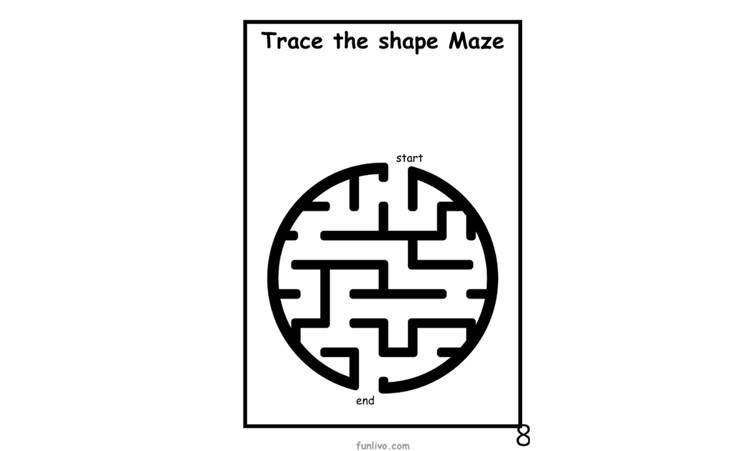
Shape-based maze activities help children recognize shapes such as circles, squares, triangles, and hearts. They also support spatial awareness.
Best for:
- Shape recognition
- Visual discrimination
Alphabet Mazes
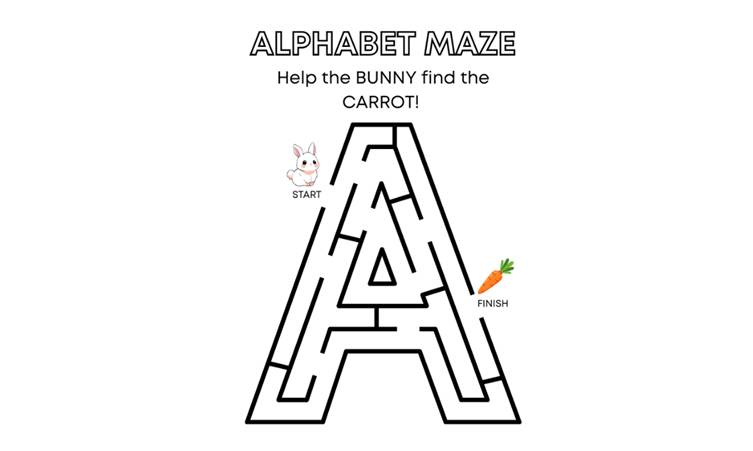
Alphabet maze activities help children recognize letter shapes by tracing paths through uppercase and lowercase letters. This builds familiarity with letters in a playful way.
Best for:
- Letter recognition
- Pre-reading readiness
Printable Maze Activities for Home and Preschool
Printable maze activities are especially useful because they are:
- Screen-free
- No-prep
- Easy to print
- Suitable for short daily practice
Parents and teachers can choose specific maze types based on a child’s age and readiness. Many families laminate pages or use plastic sleeves with dry-erase markers so children can practice repeatedly.
How Often Should Preschoolers Do Maze Activities?
Short, consistent sessions are best for young learners.
Recommended routine:
- 5–10 minutes per session
- 3–4 times per week
- Stop when the child loses interest
Maze activities for preschool should always feel enjoyable. Learning happens best when children are relaxed and engaged.
Common Parent Problems Maze Activities Help Solve
Many parents worry that their child:
- Has poor pencil grip
- Cannot focus on worksheets
- Gets frustrated easily
- Is not ready for writing
Maze activities for preschool address these concerns gently. They build foundational skills step by step without forcing formal writing too early.
The American Academy of Paediatrics highlights the importance of play in early childhood development. Maze activities align with this play-based approach by promoting experimentation, focus, and active learning in a screen-free way.
Frequently Asked Questions (FAQ)
Are maze activities good for preschool?
Yes. Maze activities for preschool help build focus, pencil control, and early problem-solving skills in a playful, low-pressure way.
What age should children start maze activities?
Simple line mazes can start around 2.5 years, while number, shape, and alphabet mazes work best for ages 3–5.
How long should a maze activity session be?
Five to ten minutes is enough. Short sessions prevent frustration and keep learning enjoyable.
Do maze activities replace handwriting practice?
No. Maze activities prepare children for handwriting by strengthening the skills needed before writing begins.
Are printable maze worksheets better than digital games?
Printable maze activities encourage hands-on learning, better focus, and reduced screen time, which many parents prefer.
Final Thoughts
Maze activities for preschool are more than just fun worksheets. They are powerful early learning tools that support fine motor development, focus, and problem-solving. Whether children are tracing lines, numbers, shapes, or letters, maze activities help build a strong foundation for writing and reading—one path at a time.