
Complete Nursery English Syllabus in India (Age 3–4): What Your Child Should Learn
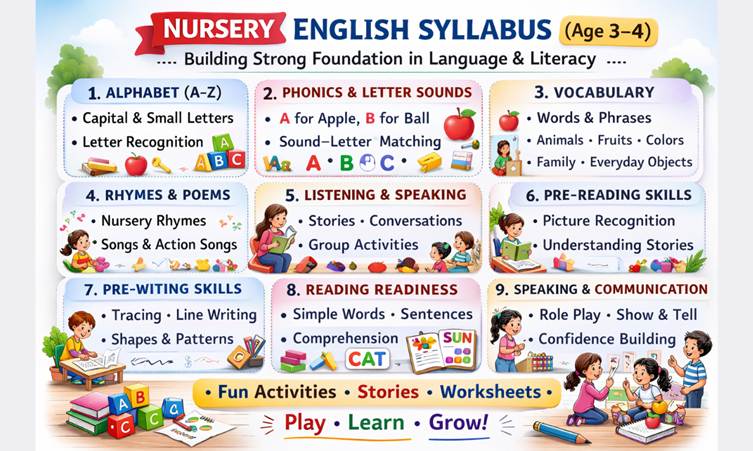
Understanding what your child should learn in nursery English can be confusing for parents. Unlike higher grades, nursery-level English in India does not follow a single official textbook or board syllabus. Instead, most schools follow a commonly adopted framework that helps children develop essential language and literacy skills in a fun and age-appropriate way.
This article explains the English Nursery syllabus in India (ages 3–4) — covering foundational components, examples of activities, and why each area matters.
This guide is based on reputable early childhood education principles and practical classroom experience.
What Is the Purpose of a Nursery English Syllabus?
At age 3–4, the goal of English learning is NOT academic reading and writing. Instead, it focuses on communication, listening, speaking, recognition of letters, vocabulary exposure, and early literacy awareness.
According to early literacy research, children who experience rich language exposure through stories, conversations, rhymes, and play develop stronger reading and writing skills later in school.
The National Council of Educational Research and Training (NCERT) and many Indian preschool programs emphasize play-based and activity-based language learning at this stage.
Core Components of the Nursery English Syllabus
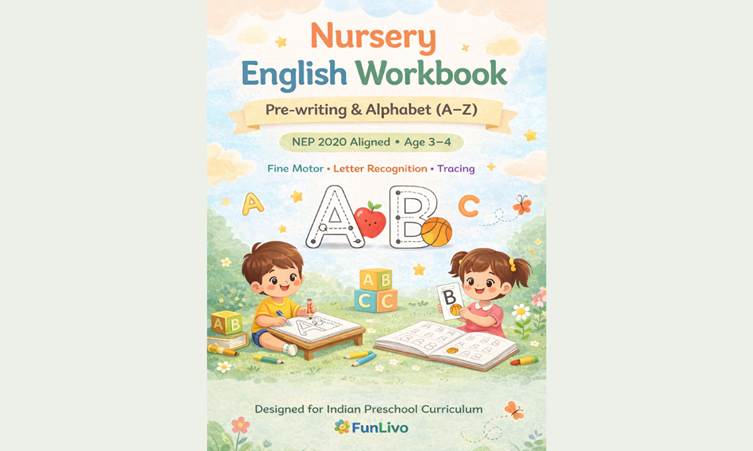
1. Alphabet Recognition (A–Z)
Children should:
- Identify capital and small letters (A a, B b, C c). …)
- See letters in different contexts (books, signs, labels)
- Begin associating letters with sounds
Example activities:
- Letter flashcards
- Alphabet songs
- Matching letters with objects
Alphabet awareness lays the foundation for early reading skills. Without familiarity with letter shapes and names, children find it difficult to progress to phonics and reading.
2. Phonics and Letter Sounds
‘Phonics’ refers to connecting letters with their sounds rather than just letter names.
Children should:
- Hear the sound at the beginning of words (e.g., /b/ for “ball”)
- Match sound to letter symbol
- Participate in simple phonics games
Example activities:
- Sound-picture matching
- Listening games (find the object that starts with the same sound)
Phonics instruction at this stage is very gentle and play-based. Early phonics understanding is linked to later reading fluency according to literacy researchers. (Phonological awareness research)
3. Vocabulary Building and Oral Language Skills
Children learn new words fastest through natural contexts — stories, conversations, play, and rhymes.
Key expectations:
- Understand and use simple words and phrases
- Learn vocabulary related to everyday life (family, animals, colors, objects)
- Use simple sentences to express needs or describe things
Example activities:
- Picture book reading
- Storytelling and discussion
- Naming objects during play
Research shows that a rich vocabulary backing helps children comprehend and enjoy reading later in school.
4. Listening and Comprehension

Listening comprehension skills are taught through:
- Classroom stories and poems
- Simple instructions and response activities
- Questions related to stories, pictures, or play
Children learn to:
- Listen attentively
- Follow basic instructions
- Answer simple questions (“What happened first? ”)
Example activities:
- Storytime followed by questions
- Audio rhymes
- Group listening games
Listening forms the foundation for reading comprehension later.
5. Pre-Reading Awareness
Pre-reading skills prepare children for future reading tasks. These include:
- Recognizing that printed text carries meaning
- Turning book pages in order
- Relating pictures with words
Example activities:
- Shared book reading
- Pointing to words as adults read aloud
- Picture surveys
6. Rhyme, Rhythm, and Songs

Nursery children enjoy rhythm and rhymes. Rhyming supports phonological awareness — the ability to hear sound patterns in words.
Children should:
- Participate in nursery rhymes
- Recognize rhyming word pairs
- Enjoy rhythm-based word games
Example activities:
- Singing rhymes together
- Rhyming word play (“cat”, “hat”, “bat”)
- Clap along rhythm songs
These early rhythm activities strengthen sound recognition skills.
7. Pre-Writing Skills
While formal writing is not part of nursery learning, children should practice:
- Holding pencils and crayons properly
- Tracing lines and simple shapes
- Scribbling and early strokes
Example activities:
- Tracing worksheets
- Playdough letter forming
- Coloring books
Pre-writing skills strengthen hand muscles and prepare children for future letter writing.
8. Speaking and Communication Through Play
Nursery English learning is most effective when language happens naturally.
Children should:
- Speak in short sentences
- Express likes and dislikes
- Engage in conversations with peers and adults
Example activities:
- Role play
- Show-and-tell
- Puppet storytelling
Play naturally motivates children to use language creatively and confidently.
How This Syllabus Is Used in India
Schools across India — whether CBSE, state boards, or private preschool programs — use this syllabus framework as guidance. However, the exact activities and sequencing may vary.
Some schools may introduce rhymes earlier; others might focus more on oral communication before phonics. This flexibility is normal and suitable for children who develop at their own pace.
Frequently Asked Questions (FAQs)
Q1: Should nursery children start reading books independently?
No. At age 3–4, the focus is on listening, speaking, letter recognition, and pre-literacy activities.
Q2: How often should parents read with their child?
Daily reading for 10–15 minutes creates a strong language foundation.
Q3: Is it necessary for nursery children to write letters?
Basic tracing and pre-writing skills are helpful, but independent writing usually begins later.
Q4: Can nursery English learning be done at home?
Yes — everyday activities, songs, and shared reading create a rich language environment.
Ending Note for Parents
Early English learning is not about pressure. It is about curiosity, exposure, and joyful language experiences. When children feel confident and enjoy language, they build strong foundations for school and life.
Disclaimer
The English Nursery syllabus may vary from school to school and board to board in India.
This article reflects the commonly followed English learning areas for nursery children aged 3–4 and is aligned with trusted early childhood education practices.