
Complete Nursery Syllabus in India: Skills Your Child Should Learn at Age 3–4

Many parents worry about what exactly their child should learn before starting formal schooling. The nursery syllabus in India is carefully designed to build a strong base for learning without putting pressure on young children. At the nursery stage, learning is not about heavy books or memorization. It is about helping children develop thinking ability, communication skills, social behavior, and confidence.
At age 3–4, children learn best through play, stories, music, and real-life experiences. Modern preschool education in India follows early childhood learning frameworks that focus on overall development. These frameworks suggest that early years should focus on foundational literacy, numeracy, social skills, and motor development.
Research shows that early childhood education plays a major role in long-term learning success and emotional development.
Understanding the nursery syllabus in India helps parents support their child’s learning journey and choose the right educational resources.
Language and Literacy Skills in Nursery Syllabus in India
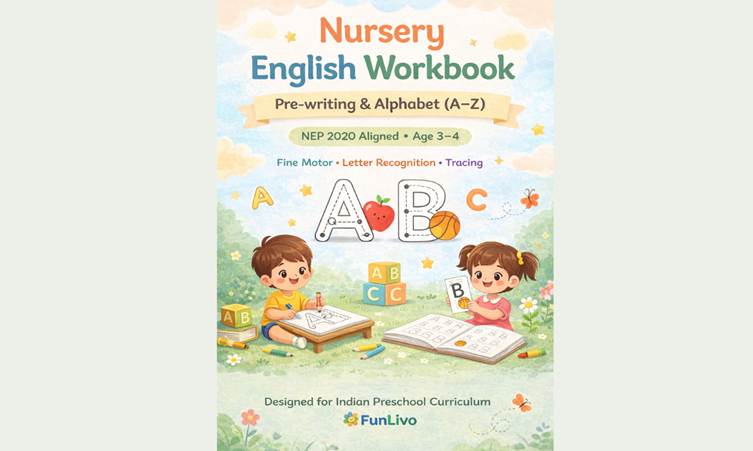
Language learning is one of the most important parts of the nursery syllabus in India. At this stage, children start recognizing sounds, understanding simple words, and expressing their thoughts clearly.
Children do not start with writing full sentences. Instead, they focus on listening, speaking, and recognizing letters through fun learning methods like rhymes, stories, and picture cards.
Children usually learn:
- Alphabet recognition (A–Z)
- Picture vocabulary words
- Rhymes and storytelling listening skills
- Beginning sound identification
- Pre-writing skills like line tracing and curves
- Name recognition and simple letter identification
Language learning improves confidence, communication skills, and imagination. Storytelling and conversation activities help children learn emotional expression and social interaction.
Alphabet Tracing Workbook and Beginning Sound Worksheets help children practice language skills in a structured way at home.
Maths Readiness Skills for Nursery Kids
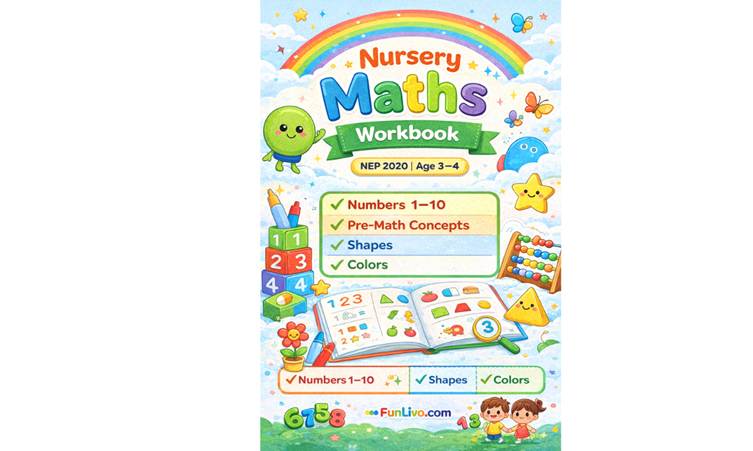
Math learning in nursery focuses on understanding numbers and basic concepts through activities and games. The goal is to make numbers fun and meaningful for children.
Children usually learn:
- Number recognition (1–10 or 1–20)
- Counting everyday objects
- Matching objects and numbers
- Size comparison (big / small)
- Shape recognition (circle, square, triangle)
- Pattern recognition (simple sequences)
Math readiness helps build logical thinking and problem solving ability. Activity-based math learning builds confidence and reduces fear of numbers later.
Early childhood education frameworks recommend learning math concepts through play and real-life examples instead of textbooks.
Pre-number Concept Worksheets and Matching Activity Worksheets help children understand maths concepts better.
EVS and General Awareness Learning
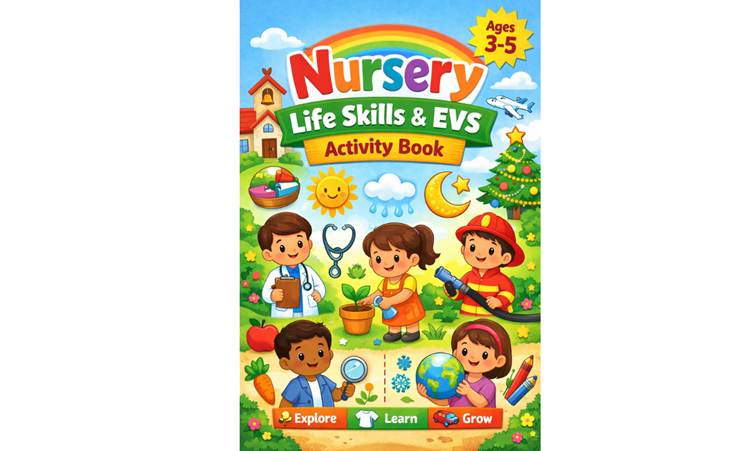
Environmental learning is another key part of the nursery syllabus in India. EVS helps children understand their surroundings and everyday life situations.
Children usually learn:
- Body parts and personal hygiene
- Family members and helpers
- Food habits and healthy eating
- Animals and birds
- Transport basics
- Seasons and weather
EVS learning builds observation skills and curiosity. It helps children connect classroom learning with real life situations.
Modern curriculum frameworks encourage theme-based learning where children learn through stories, pictures, and real-life examples.
Life Skills and EVS Activity Workbooks help reinforce these concepts through fun activities.
Social, Emotional and Life Skills Development
Modern early childhood education gives equal importance to social and emotional learning. The nursery syllabus in India includes activities that help children build confidence and social behavior.
Children learn:
- Sharing and teamwork
- Classroom behavior
- Emotional expression
- Confidence building
- Following routines
- Basic independence skills
Early emotional learning reduces anxiety and improves classroom adjustment. Social learning helps children communicate and build friendships easily.
Global early learning programs emphasize emotional and social development along with academic learning.
Motor Skills and Pencil Control Skills
Motor skill development is very important before writing starts. Nursery children first develop hand muscle strength and coordination.
Children practice:
- Line tracing
- Curve tracing
- Dot tracing
- Coloring activities
- Clay modeling and craft work
- Cutting and pasting activities
Fine motor skill development improves writing readiness, hand control, and concentration.
Line Tracing and Pencil Control Practice Worksheets help children build strong writing foundation.
Play-Based Learning Approach in Nursery Education
Modern preschool education follows play-based learning methods. Children learn better when they are relaxed and interested.
Play-based learning helps:
- Brain development
- Creativity and imagination
- Language development
- Social interaction skills
- Problem solving ability
Early childhood education systems across the world recommend activity-based learning for better long-term results.
School Readiness Skills Children Develop Through Nursery Learning
The nursery syllabus in India is designed to prepare children for formal school learning in a smooth and stress-free way. Nursery education focuses on building confidence, classroom behavior, and learning interest. When children develop school readiness skills early, they adjust faster in LKG and primary classes. These skills are built slowly through daily practice, play activities, and guided learning.
Children gradually become comfortable with structured learning, teacher instructions, and group activities. This stage builds the base for future academic success and social confidence.
Children develop these school readiness skills:
- Listening to teacher instructions carefully
- Sitting and focusing for short learning periods
- Following daily routine and classroom rules
- Recognizing own name and basic personal information
- Participating in group activities and discussions
- Expressing needs and feelings using simple words
- Showing curiosity and asking simple questions
- Managing basic self-care tasks independently
How Parents Can Support Nursery Learning at Home
Parents play a very important role in early learning. Small daily activities can create big learning improvement.
Parents can:
- Read storybooks daily
- Talk and communicate regularly
- Practice tracing slowly
- Encourage drawing and coloring
- Teach daily routine habits
- Ask simple thinking questions
Consistency is more important than long study hours. Even 15–20 minutes daily practice is enough.
The main goal should be building interest and confidence in learning.
FAQ Section About Nursery Syllabus in India
What is the main goal of nursery syllabus in India?
The main goal is overall development including language, maths basics, social skills, and motor skills.
At what age should a child start learning alphabets?
Most children start alphabet recognition between 3–4 years through play-based learning.
Is writing compulsory in nursery?
No. Pre-writing skills like tracing and pencil control are more important first.
Is nursery syllabus same in all schools?
Basic structure is similar, but activities and teaching methods may differ.
How much time should nursery children study daily?
15–30 minutes structured learning is enough along with play-based activities.
Disclaimer
This article is for educational awareness only. Actual syllabus may vary depending on school curriculum and board guidelines.