
Scissor Cutting Activities for Kids (Ages 2.5–6): A Complete Parent & Teacher Guide
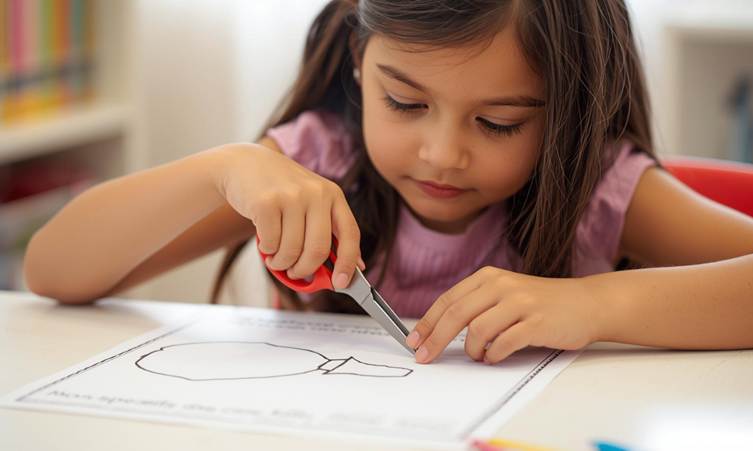
Learning to use scissors is an important early childhood skill. Scissor cutting activities for kids help build fine motor strength, hand–eye coordination, and confidence needed for writing, drawing, and daily tasks. While cutting may look like a simple craft activity, it plays a major role in early brain and motor development.
In this guide, you’ll learn why scissor cutting activities matter, how scissor skills develop step by step, how to practice safely at home, and how to choose the right cutting worksheets for each age group.
Why Scissor Cutting Activities Matter for Kids
Scissor cutting is more than just an art activity. Regular practice supports multiple developmental areas at the same time.
Key benefits of scissor cutting activities for kids:
- Fine motor strength in fingers and hands
- Hand–eye coordination
- Bilateral coordination (using both hands together)
- Pencil control and pre-writing readiness
- Focus, patience, and confidence
Children who practice cutting regularly often find it easier to hold pencils, color within boundaries, and complete classroom tasks independently. That’s why scissor cutting activities are widely used in preschool, kindergarten, homeschooling, and therapy settings. Research has shown that strong fine motor skills are closely linked to later academic achievement and classroom performance in children.
What are Scissor Cutting Activities for Kids?
Scissor cutting activities for kids are structured exercises where children cut along straight, curved, zigzag, or dotted lines. These activities often include cutting out shapes, pictures, or objects with clear visual boundaries.
Unlike free cutting, guided cutting worksheets:
- Provide predictable difficulty levels
- Reduce frustration
- Encourage correct hand positioning
- Build confidence step by step
Object-based cutting (such as fruits, animals, or everyday items) is especially effective because it mirrors real-life hand movements and keeps children engaged.
How Scissor Skills Develop by Age
Children develop scissor skills gradually. Understanding this progression helps adults choose the right activities.
Ages 2.5–3.5 (Beginner Level)
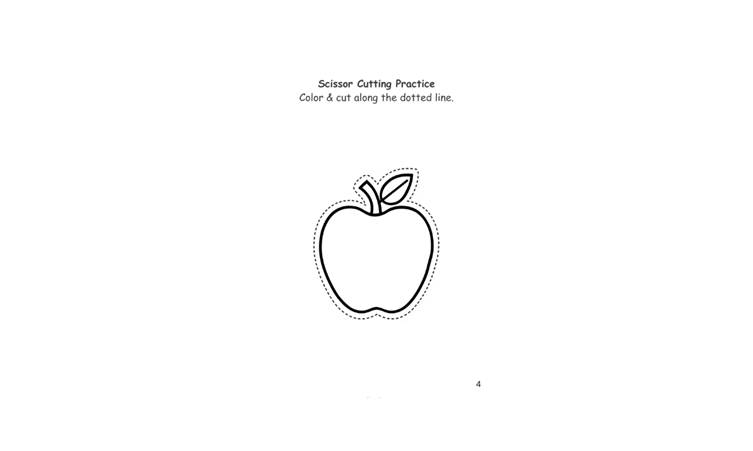
- Snipping paper
- Cutting straight lines
- Large, simple shapes
- One object per page
Skills developed:
- Basic hand strength
- Learning to open and close scissors
Ages 3–4.5 (Intermediate Level)
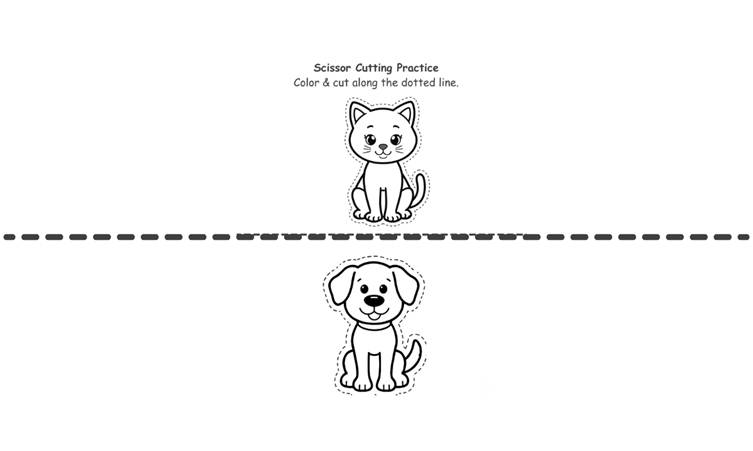
- Curved and angled lines
- Cutting around objects
- Two objects per page
Skills developed:
- Better control
- Improved coordination
- Increased attention span
Ages 4.5–6 (Advanced Level)
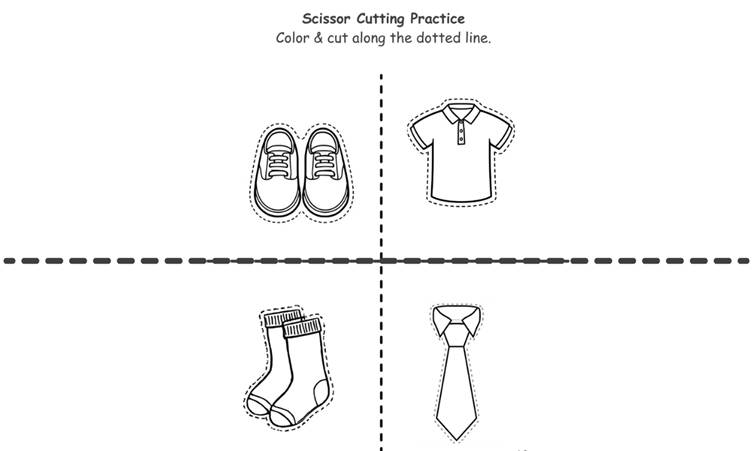
- Small or detailed objects
- Multiple objects per page (3–4)
- Precision cutting
Skills developed:
- Pre-writing muscle control
- Precision and accuracy
- Focus and patience
Occupational therapists often recommend object-based scissor cutting activities to strengthen hand muscles used for writing.
Why a Level-Based Approach Works Best
Not all children learn at the same speed. A level-based approach ensures:
- Children don’t feel overwhelmed
- Skills build naturally
- Confidence grows with success
Starting with large objects and gradually moving to smaller, more detailed shapes allows children to master cutting without frustration. This structured progression is one of the most effective ways to use scissor cutting activities for kids.
How to Increase Difficulty in Scissor Cutting Activities
Once a child is comfortable with basic cutting, difficulty can be increased safely.
Ways to increase challenge:
- Move from 1 object per page to 2–4 objects per page
- Reduce object size gradually
- Introduce curves, corners, and mixed shapes
- Use themed pages (animals, food, everyday objects)
This gradual increase strengthens hand muscles and improves cutting accuracy while keeping children motivated.
How to Practice Scissor Cutting Safely at Home
Safety is just as important as skill-building.
Scissor safety tips:
- Use child-safe scissors only
- Always supervise young children
- Sit at on a chair while cutting
- Cut away from the face and body
- Store scissors out of reach after use
Teaching safety rules early helps children develop independence while staying protected.
Using Scissor Cutting Activities in Different Learning Settings
Scissor cutting activities for kids are flexible and easy to use in many environments.
At home:
- Quiet time activity
- Part of daily learning routines
- Reusable with laminated pages
In preschool or kindergarten:
- Fine motor learning centers
- Small group work
- Independent practice stations
For homeschooling:
- Pre-writing preparation
- Combined with coloring, counting, or naming objects
This versatility makes cutting worksheets a long-term learning resource.
Frequently Asked Questions
What age should kids start scissor cutting?
Most children can begin simple scissor cutting activities around 2.5 to 3 years, using child-safe scissors and large shapes.
Should scissor cutting worksheets be black and white or colored?
Black-and-white worksheets are ideal. Children can color the objects before cutting, adding an extra fine motor step and reducing printing costs.
Can I laminate scissor cutting worksheets?
Yes. Laminating allows children to practice tracing and cutting paths repeatedly using dry-erase markers. For cutting practice, use printed copies.
How often should kids practice scissor cutting?
2–3 short sessions per week are enough to build strength and confidence without fatigue.
Final Thoughts
Scissor cutting activities for kids play a vital role in early childhood development. When introduced gradually and practiced consistently, they help children build the strength, coordination, and confidence needed for writing, self-care, and classroom success.
A structured, level-based approach—starting with large objects and progressing to detailed, multi-object pages—ensures children learn at their own pace while staying motivated.
Whether used at home, in school, or for homeschooling, scissor cutting worksheets remain one of the most effective tools for developing fine motor skills.