UKG Syllabus in India
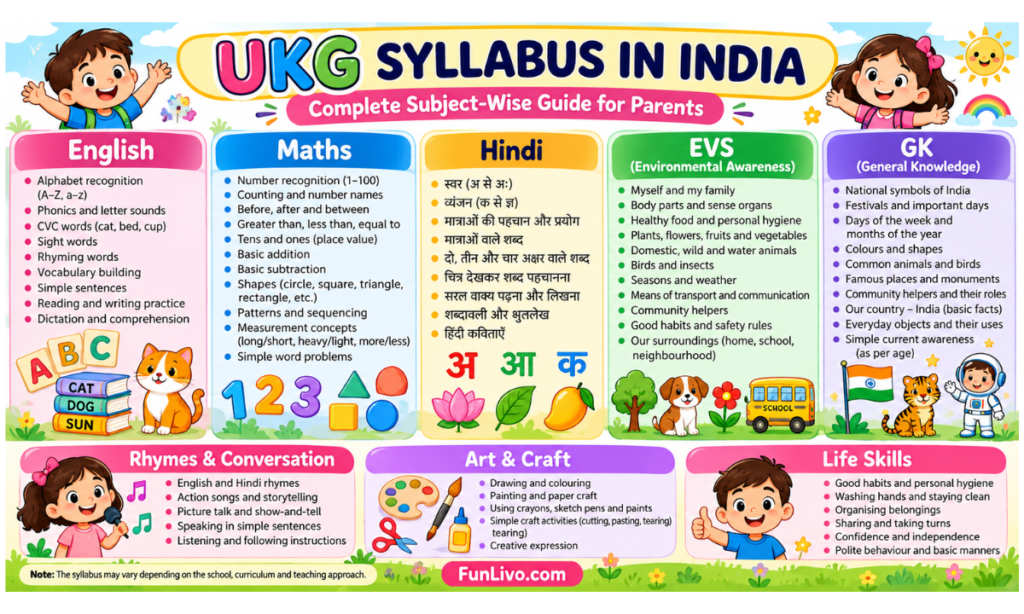
The UKG Syllabus in India helps children strengthen their language, early mathematics, communication, and problem-solving skills before entering Class 1. It generally includes English, Maths, Hindi, Environmental Awareness (EVS), and General Knowledge (GK), along with rhymes, creative activities, and life skills. This guide covers common UKG topics and explains how learning progresses from LKG to UKG.
UKG Syllabus in India: Subjects at a Glance
The subjects and activities commonly included in the UKG curriculum are listed below.
| Subject / Category | Topics Covered |
| English | Phonics, reading, writing, vocabulary |
| Mathematics | Counting, number names, addition, subtraction |
| Hindi | स्वर, व्यंजन, मात्राएँ, सरल शब्द |
| EVS | Family, plants, animals, surroundings |
| General Knowledge | Community helpers, festivals, national symbols |
| Rhymes & Conversation | Poems, action songs, speaking practice |
| Art & Craft | Drawing, colouring, paper craft |
| Life Skills | Good habits, hygiene, independence |
Note: Subjects and topics may vary depending on the school, curriculum, and teaching approach. Some schools combine EVS and GK or teach certain skills through integrated activities.
The National Curriculum Framework for Foundational Stage, developed by NCERT, emphasises play-based learning and the holistic development of children during the early years.
UKG Syllabus in India: Subject-Wise Topics
1. UKG English Syllabus
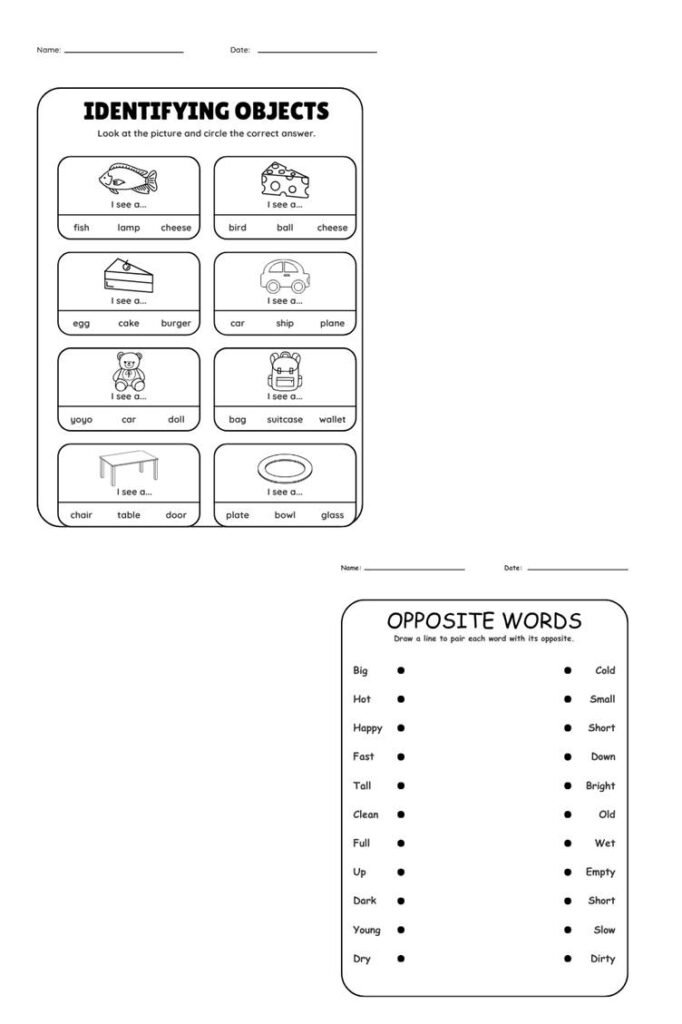
English learning focuses on developing listening, speaking, reading, and early writing skills.
- Capital and small letters; letter recognition and sounds
- Phonics and blending sounds
- CVC words, sight words, and rhyming words
- Vocabulary building and picture reading
- Simple sentences and basic sentence formation
- Naming words and introductory grammar, where appropriate
- Handwriting, dictation, and simple comprehension activities
2. UKG Maths Syllabus
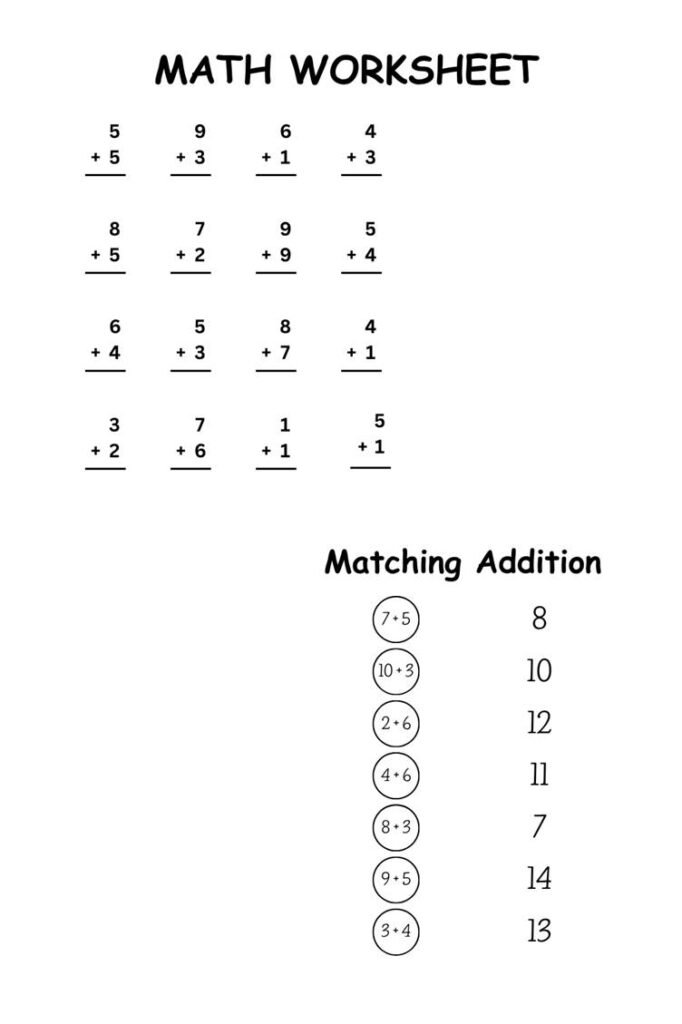
Mathematics helps children develop number sense, logical thinking, and basic problem-solving abilities.
- Number recognition and counting
- Number names and missing numbers
- Before, after, and between numbers
- Greater than, less than, and equal to
- Place value: tens and ones, where appropriate
- Basic addition and subtraction
- Shapes, patterns, and comparisons
- Measurement concepts: long/short, heavy/light, more/less
- Sorting, sequencing, and simple word problems
The number range and difficulty of calculations depend on the school’s curriculum and the child’s learning level.
3. UKG Hindi Syllabus
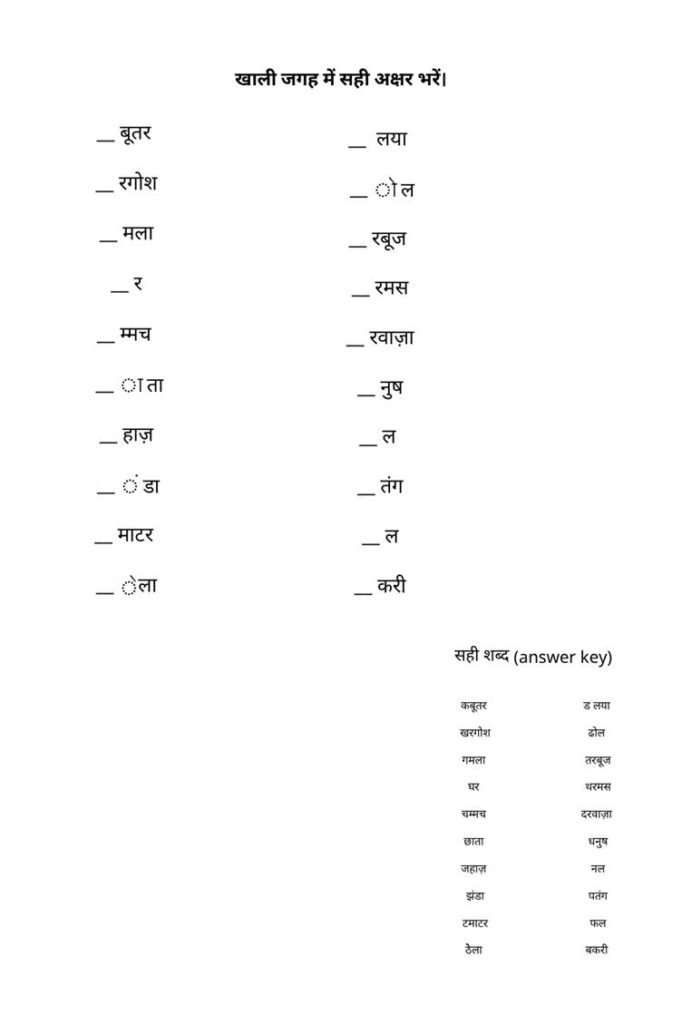
Hindi learning builds on letter recognition and simple word formation introduced in earlier classes.
- स्वर and व्यंजन revision
- मात्रा पहचान और उनका प्रयोग
- दो, तीन और चार अक्षर वाले सरल शब्द
- मात्राओं वाले शब्द पढ़ना और लिखना
- चित्र देखकर शब्द पहचानना
- सरल वाक्य पढ़ने और लिखने का अभ्यास
- श्रुतलेख और शब्दावली
- हिंदी कविताएँ और मौखिक अभ्यास
The sequence of मात्रा अभ्यास and the expected reading level may differ between schools.
4. UKG EVS Syllabus
Environmental awareness introduces children to their surroundings, living things, and everyday experiences.
- Myself, my family, and my school
- Body parts and sense organs
- Healthy food and personal hygiene
- Plants, flowers, fruits, and vegetables
- Domestic, wild, and water animals
- Birds and insects
- Seasons and weather
- Means of transport and communication
- Community helpers
- Good habits and basic safety rules
5. UKG General Knowledge (GK) Syllabus
GK activities develop curiosity and awareness of the world around children.
- National symbols of India
- Festivals and important celebrations
- Colours, shapes, and everyday objects
- Days of the week and months of the year
- Common animals, birds, and their young ones
- Famous places and familiar landmarks
- Our helpers and their roles
- Basic questions about the child’s surroundings
LKG vs UKG Syllabus: What Changes?
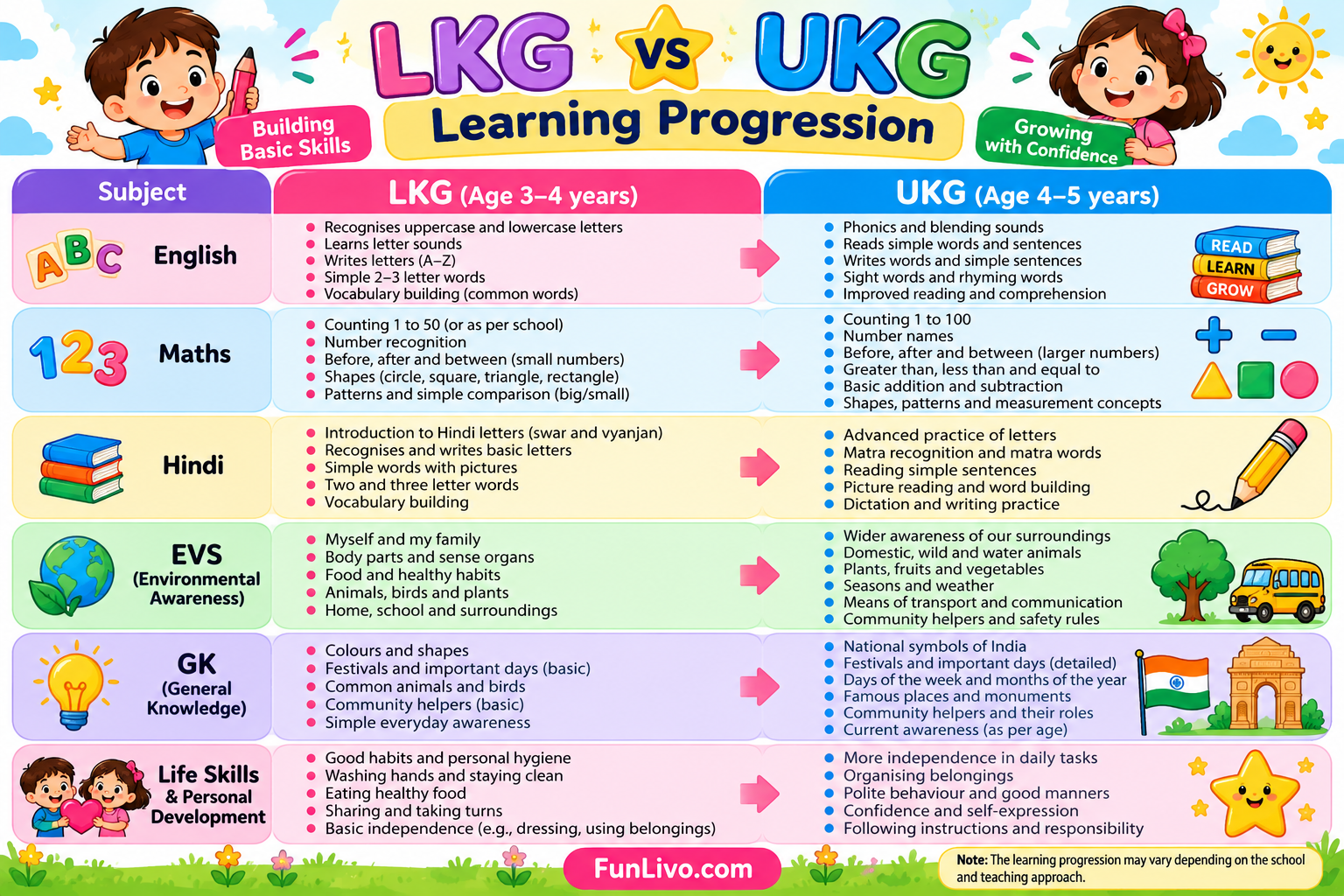
UKG generally builds on the skills introduced in LKG. The following table shows an indicative progression rather than a fixed national syllabus.
| Subject | LKG Learning | UKG Learning |
| English | Alphabet recognition, letter sounds, simple words | Phonics blending, more vocabulary, simple reading and sentences |
| Maths | Number recognition, counting, basic shapes | Number comparison, tens and ones, introductory addition and subtraction |
| Hindi | स्वर, व्यंजन, simple words | मात्रा अभ्यास, more word reading, simple sentence formation |
| EVS | Myself, family, fruits, animals | Wider awareness of plants, seasons, transport, hygiene, and safety |
| GK | Colours, common objects, familiar animals | Festivals, national symbols, community helpers, and general awareness |
| Writing | Letter and number tracing | More independent letter, word, and number writing |
| Life Skills | Basic manners and following instructions | Greater independence, sharing, communication, and completing simple tasks |
Important: This comparison describes common learning progression. A child may cover some topics earlier or later depending on the school’s curriculum and individual readiness.
Rhymes, Art & Craft, and Life Skills in UKG
Alongside academic subjects, children benefit from activities that support creativity, communication, physical coordination, and independence.
Common activities include:
- English and Hindi rhymes, action songs, and storytelling
- Drawing, colouring, painting, and simple paper craft
- Conversation practice and show-and-tell
- Recognising emotions and expressing needs
- Washing hands, organising belongings, and following routines
- Sharing, taking turns, and following simple instructions
These activities support the holistic, play-based approach encouraged by the National Curriculum Framework for the Foundational Stage.
How Can Parents Help Children Practise at Home?
Parents can support learning without turning everyday practice into formal lessons.
- Read picture books and practise simple words together.
- Use counting objects and everyday items for basic maths.
- Practise Hindi मात्रा वाले शब्द through picture cards and reading.
- Discuss plants, animals, weather, and familiar surroundings.
- Encourage drawing, storytelling, and simple independent tasks.
Short, regular, play-based activities are more useful than pressuring children to memorise everything at once.
Frequently Asked Questions About UKG Syllabus in India
1. What subjects are included in the UKG syllabus in India?
Common subjects include English, Mathematics, Hindi, EVS, and GK. Rhymes, art, conversation, and life skills may also form part of the curriculum.
2. Is the UKG syllabus the same in every school?
No. Schools may follow different curricula and teaching plans. The topics listed in this guide are common examples, not a mandatory syllabus for every school.
3. What is the difference between LKG and UKG?
LKG introduces foundational concepts, while UKG generally develops these skills further through more advanced reading readiness, writing, number concepts, and simple problem-solving.
4. How can parents prepare children for Class 1?
Parents can encourage reading, number recognition, simple writing, communication, independence, and following instructions through age-appropriate games and everyday activities.
Conclusion
The UKG Syllabus in India provides a broad foundation for language, mathematics, environmental awareness, creativity, and essential life skills. Understanding common topics and the progression from LKG to UKG can help parents support their child’s learning at home.
Prepare Your Child for UKG with Strong Foundations
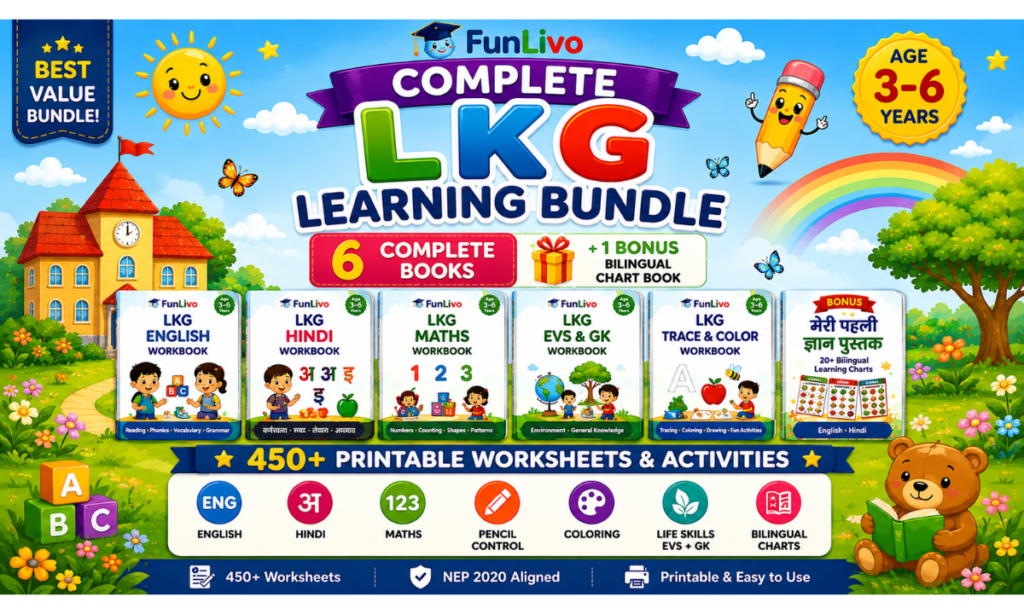
Before moving to UKG, children benefit from practising the foundational skills introduced in Nursery and LKG. If you are looking for extra practice at home, explore the FunLivo Nursery & LKG Worksheet Bundle, featuring 450 worksheets designed to support early learning through engaging activities.
Give your child more opportunities to practise essential early learning skills at their own pace.
Explore the LKG 450+ Worksheets Bundle.
Explore FunLivo’s educational charts, printable worksheets, and preschool learning activities to make everyday practice simple and engaging.